


Blog

Composition of Real Estate Regulatory Authority
Civil Law

Composition of Real Estate Regulatory Authority

Real Estate (Regulation and Development) Act, 2016, is a major reformative legislation inthe real estate sector. This legislation regulates the real estate sector and also ensuresproper enforcement of the act through various ways. The act establishes a real estateregulatory authority, a separate authority having its own distinct legal identity for this act.Well-qualified members are appointed in accordance with the provisions of the act toperform the various functions of the authority. Important Provisions: Real Estate Regulatory Authority under RERA Act S.20. Establishment and incorporation of Real Estate Regulatory Authority.S.21. Composition of Authority.S.22. Qualifications of Chairperson and Members of Authority.S.23. Term of office of Chairperson and Members.S.24. Salary and allowances payable to Chairperson and Members.S.26. Removal of Chairperson and Members from office in certain circumstances.S.32. Functions of Authority for promotion of real estate sector.S.34. Functions of Authority.S.35. Powers of Authority to call for information, conduct investigations.S.36. Power to issue interim orders.S.37. Powers of Authority to S.20. Establishment and incorporation of Real Estate Regulatory Authority S. 20 directs the appropriate government to establish an authority known as the Real EstateRegulatory Authority to exercise the powers conferred by the act, within 1 year from theenforcement of this act. The appropriate government needs to establish such authority;however, two or more states or union territories can establish a single authority as theydeem fit. Until the establishment of a Regulatory Authority under this section, the appropriateGovernment may delegate the powers of the real estate regulatory authority to any otherRegulatory Authority or to any officer. However, after the establishment of the RegulatoryAuthority under this act, all cases pending with the designated Regulatory Authority shall betransferred to the newly established authority under S.20 The Authority shall be a body corporate by the name, having perpetual succession and acommon seal, with the power, subject to the provisions of this Act. The authority shall alsohave the power to acquire, hold, and dispose of both movable and immovable property. Theauthority also has the power to enter into a contract, and the authority by the said name cansue or be sued. Besides this, the real estate regulatory authority has various other powersand functions S.21. Composition of Authority. Members of the Real Estate Regulatory Authority are generally appointed by the appropriateGovernment (typically the state government).The Real Estate Regulatory Authority consists of● a Chairperson● not less than two whole-time MembersThe chairperson will be the presiding officer, and two other whole-time members willbe there in the authority. Members of the Real Estate Regulatory Authority cannot beless than two. Two members should be there at least. S.22. Qualifications of Chairperson and Members of Authority. a. Appointment of Chirperson and Members: The appropriate government appoints the chairperson and members of the Real EstateRegulatory Authority. With the help of the Selection Committee, the appropriate governmentappoints the chairperson and members of the Real Estate Regulatory Authority. Theseappointments are done according to the experience of the individual. b. Selection Committee The Selection Committee consists of –● The Chief Justice of the High Court● Nominee of the Chief Justice of the High Court● The Secretary of the Department dealing with Housing and the Law SecretaryThe Selection Committee does these appointments in such a manner as may beprescribed, from amongst persons having adequate knowledge of and professionalexperience. c. Qualifications of Chairperson d.Qualifications of Member S.23. Term of office of Chairperson and Members Tenure of Chairperson and Members● Five years (from the date on which they enter upon their office) OR● Sixty-five years of age, whichever is earlier.If any person has any kind of financial or other interest that is likely to affect their functionsprejudicially as a Member or chairperson, then such a person should not be appointed as aMember or chairperson of the Real Estate Regulatory Authority. Before appointing anyperson as a Chairperson or Member of the Real Estate Regulatory Authority, the appropriateGovernment must comply with this condition. ReappointmentAny person who has held the post of member or chairperson in the Real Estate RegulatoryAuthority should not be eligible for re-appointment. This ensures fixed tenure andindependent functioning while preventing misuse of power and political influence. S.24. Salary and allowances payable to Chairperson and Members. Salary and allowances payable to the Chairperson and other Members of the Real EstateRegulatory Authority, with terms and conditions of service of the Chairperson and otherMembers, shall be such as may be prescribed by the appropriate government. Anappropriate government can make decisions in this regard. RelinquishmentA Chairperson or a Member of the Real Estate Regulatory Authority can relinquish theiroffice by serving notice to the appropriate government. Such notice regarding therelinquishment of office should be in writing and it must be given to the appropriategovernment before not less than three months. S.26. Removal of Chairperson and Members from office in certain circumstances. Chairperson or a Member of the Real Estate Regulatory Authority can be removed from hisoffice in accordance with the provisions of section 26.Removal of the chairperson or any other member can be done through a notified process onthe following grounds If the Chairperson or such other Member –(a) has been adjudged as an insolvent(b) has been convicted of an offence involving moral turpitude(c) has become physically or mentally incapable of acting as a Member(d) has acquired such financial or other interest as is likely to affect his functions prejudicially(e) has so abused his position as to render his continuance in office prejudicial to the publicinterest.Vacancy caused in the office of the Chairperson or any other Member by such removal shallbe filled within a period of three months from the date on which such vacancy occurs. Powers and Functions of the Real Estate Regulatory Authority S.32 and 34 list various functions that a real estate authority needs to perform for the smoothfunctioning of the act. Some of them are regulatory, some of them are promotional, whilesome of them are growth-centric. Regulation and Development of the real estate sector isthe ultimate goal of these functions. The Real Estate Regulatory Authority generally enjoyspowers similar to those of the civil court, necessary to perform its functions. These powersare given under S.35 to

Powers and Functions of Real Estate Regulatory Authority
Civil Law

Powers and Functions of Real Estate Regulatory Authority

Introduction to Powers and Functions of Real Estate Regulatory Authority Real Estate (Regulation and Development) Act, 2016, is a major reformative legislation in the real estate sector. This legislation regulates the real estate sector and also ensures proper enforcement of the act through various ways. The act establishes a real estate regulatory authority, a separate authority having its own distinct legal identity for this act. The act also designated various powers and functions to the authority for the smooth functioning. Important Provisions S.20. Establishment and incorporation of Real Estate Regulatory Authority. S. 20 directs the appropriate government to establish an authority known as the Real Estate Regulatory Authority to exercise the powers conferred by the act, within 1 year from the enforcement of this act. The appropriate government needs to establish such authority; however, two or more states or union territories can establish a single authority as they deem fit. Until the establishment of a Regulatory Authority under this section, the appropriate Government can designate the powers of the real estate regulatory authority to any other Regulatory Authority or any officer. However, after the establishment of the Regulatory Authority under this act, all cases pending with the designated Regulatory Authority shall be transferred to the newly established authority under S.20 The Authority shall be a body corporate by the name, having perpetual succession and a common seal, with the power, subject to the provisions of this Act. The authority shall also have the power to acquire, hold, and dispose of both movable and immovable property. The authority also has the power to enter into a contract, and the authority by the said name can sue or be sued. Besides this, the real estate regulatory authority has various other powers and functions. Functions of Authority. (S.32 & 34) S.32 and 34 list various functions that a real estate authority needs to perform for the smooth functioning of the act. Some of them are regulatory, some of them are promotional, while some of them are growth-centric. Regulation and Development of the real estate sector is the ultimate goal of these functions. The functions of the real estate regulatory authority are as follows, Functions for promotion of real estate sector : ● protection of the interests of the allottees, promoter, and real estate agent ● streamline the regulatory procedure, ensuring time-bound project approvals and clearances for the timely completion of the project ● creation of a transparent and robust grievance redressal mechanism ● encourage investment in the real estate sector ● encourage the construction of environmentally sustainable and affordable housing ● encourage grading of projects on various parameters of development ● facilitate amicable conciliation of disputes ● facilitate the digitisation of land records and systems towards conclusive property titles ● render advice to the appropriate Government in matters relating to the development of the real estate sector ● Perform any other issue that the Authority may think necessary for the promotion of the real estate sector. Regulatory functions of the authority : ● to register and regulate real estate projects and real estate agents ● to publish and maintain a website of records, a database and other important documents for public viewing, ● Publish the list of promoters as defaulters, including the necessary details for access to the general public ● to ensure compliance with the obligations cast upon the promoters, the allottees and the real estate agents ● to ensure compliance with regulations or orders, or directions made in exercise of its powers to perform such other functions as may be entrusted to the Authority by the appropriate Government, as may be necessary to carry out the provisions of this Act. Powers of the Real Estate Regulatory Authority The Real Estate Regulatory Authority generally enjoys powers similar to those of the civil court, necessary to perform its functions. These powers include: ● Power to call for information If the authority thinks it is necessary to obtain information while dealing with any matter or dispute under this act, then the real estate regulatory authority can call for information. Authority can ask the promoter, real estate agent, allottee or any such person for the information by order in writing and with the reasons recorded. ● Power to investigate and adjudicate Authority has the power to investigate a matter upon a complaint received by the complainant, suo motu order or on the suggestion of the appropriate government. For investigation, the authority can also call for evidence and examine the same. After investigation, the authority can adjudicate the matter on the merits. These are some of the important powers given to the authority concerning dispute resolution. ● Power to issue summons For investigation and proper adjudication of the matter, the authority is also entrusted with the power to issue a summons. The real estate regulatory authority can issue a summons for presence or for any other reason. ● Power to issue interim orders Sometimes it becomes necessary to provide interim relief to the parties to protect their interests or for any other necessary reason under the act. Hence, the real estate regulatory authority is empowered with power to issue interim orders during the adjudication of the matter. ● Power to issue directions To ensure proper regulation and effective implementation of the act, the authority can issue necessary directions. These directions are necessary for the smooth, hassle-free functioning of the act. However, this power is not absolute, and authority cannot issue arbitrary and unreasonable directions. ● Power to impose a penalty Various offences and penalties for these offences are covered under the act; these provisions are necessary for proper enforcement. The real estate regulatory authority has the power to impose a penalty for violations of the provisions of the act. Conclusion: The Real Estate (Regulation and Development) Act, 2016, is an important legislation in the field of real estate. While regulating the real estate sector, this act also ensures proper enforcement. For this purpose, various authorities are established under the act. Real Estate Regulatory Authority is

Summary procedure under Maharashtra Rent Control Act (1)
Breaking News Local Laws

Summary procedure under Maharashtra Rent Control Act

Summary Procedure under MRCA Maharashtra Rent Control Act, enacted in the year 1999, is a welfare legislation that protects the interests of tenants and recognizes the rights of the landlord. This act provides a special procedure of eviction for certain categories of landlords. These provisions are included to give protection to certain categories of landlords and ensure the speedy dismissal of eviction disputes. Under chapter VIII, sections 39 to 52 discuss this procedure in detail. Important Provisions : Summary procedure under Maharashtra Rent Control Act CHAPTER VIII SUMMARY DISPOSAL OF CERTAIN APPLICATIONS S.39 Provisions of this Chapter to have over-riding effect.S.40 Appointment of Competent Authority.S.41 Definition of landlord for Chapter VIII.S.42 Special provision for making an application to the Competent Authority by alandlord to evict a tenant or licensee.S.43 Special procedure for disposal of applications.S.44 Order of Competent Authority to be non-appealable and revision by the StateGovernment. What is a Summary Suit? A summary suit is a type of legal proceeding that is designed to ensure the speedy disposal of certain matters, where the defendant has no real defence. Summary suit procedure focuses on the quick resolution of disputes. S.39 Provisions of this Chapter to have over-riding effect S.39 comes with a non-obstante clause, which gives the provisions of this Chapter or any rule made thereunder a notwithstanding effect. Anything inconsistent with the provisions of this chapter, in the Act, or in any other law will be overridden. This section makes the whole chapter important over any other provision or law. S.40 Appointment of Competent Authority S. 40 directs the state government to appoint the competent authority, which is empowered with certain powers and functions. The State Government may, by notification in the Official Gazette, appoint one or more persons to be called the Competent Authority. One or more such Competent Authorities may be appointed for one or more such local areas. A person to be appointed as a Competent Authority shall be: S.41 Definition of landlord for Chapter VIII Chapter VIII states about summary disposal, but it is not available for every dispute governed by this act. The title of this chapter states that only certain matters can be disposed of through this procedure. Only a certain category of landlords can seek summary disposal. S. 41 defines the landlord who can seek summary disposal. The following landlords are included in the definition: Only this category of landlords can seek summary disposal. S.42 Application to the Competent Authority by a landlord to evict a tenant or licensee A landlord defined under section 41 can file an application as if it were a plaint, for eviction of the rented or licensed premises. Subject to the provisions of section 22 or 23 or 24, as the case may be, a landlord may submit an application to the Competent Authority, signed and verified in a manner provided in the Order VI rules 14 and 15 of the Civil Procedure, 1908. Provided, Authority must have jurisdiction over the area in which the premises are situated. S.43 Special procedure for disposal of applications S. 43 lays down the special procedure for the disposal of applications. This procedure ensures that a matter is quickly disposed of through day-to-day hearings without delay. The procedure ordinarily includes the following steps- S.44 Order of Competent Authority to be non-appealable and revision by the StateGovernment Section 44 grants protection to the order of the competent authority passed during the summary procedure by making it non- appealable. While no appeal is allowed, this section provides the alternate remedy of revision. Although these orders are non appealable but state government has the power of revision. Conclusion The Maharashtra Rent Control Act, 1999, is a welfare legislation. Through its provisions of summary procedure, it protects the rights and interests of certain categories of landlords. This ensures speedy disposal of cases and forms a part of effective enforcement mechanism of the act.

Provisions For Recovery Of Possession By Members Of Armed Forces (1)
Civil Law

Provisions For Recovery Of Possession By Members Of Armed Forces 2026

Members of the armed forces and some other categories of landlords follow special provisions for the recovery of possession. This procedure is often known as a summary procedure. The procedure for the recovery of possession by members of the armed forces is different from the procedure for the recovery of possession from other landlords. Chapter V deals with the special provisions regarding the recovery of possession in certain cases. Important Provisions S.23. Members of armed forces of the Union, scientists, or their successors-in-interest are entitled to recover possession of premises required for their occupation.S.40. Appointment of Competent Authority.S.41. Definition of landlord for Chapter VIII.S.42. Special provision for making an application to the Competent Authority by a landlord to evict a tenant or licensee.S.43. Special procedure for disposal of applications.S.44. Order of Competent Authority to be non-appealable and revision by the State Government. Summary Procedure Members of the armed forces can recover possession by summary procedure. A summary suit is a type of legal proceeding that is designed to ensure the speedy disposal of certain matters, where the defendant has no real defence. Summary suit procedure focuses on the quick resolution of disputes. Categories Of Landlord Only a certain category of landlords can seek summary disposal. It is not available for every landlord. Only certain categories of landlords can recover possession of premises required for their occupation.The following landlords can come under S.23 for recovery of possession: Only this category of landlords can seek summary disposal. Grounds For Recovery Of Possession Under S.23 Authorised officer for granting certificate Successor-in-interest under S.23 Successors in interest of the landlord mentioned under S. 23 are also eligible to recover possession. This successor in interest may be: S.40 Appointment of Competent Authority S.40 directs the state government to appoint the competent authority, which is empoweredwith certain powers and functions. The State Government may, by notification in the OfficialGazette, appoint one or more persons to be called the Competent Authority. One or moresuch Competent Authorities may be appointed for one or more such local areas. A person to be appointed as a Competent Authority shall be: S.42 Application to the Competent Authority by a landlord to evict a tenant or licensee. A landlord defined under section 41 can file an application as if it were a plaint, for eviction of the rented or licensed premises. Subject to the provisions of section 22 or 23 or 24, as the case may be, a landlord may submit an application to the Competent Authority, signed and verified in a manner provided in the Order VI rules 14 and 15 of the Civil Procedure, 1908. Provided, Authority must have jurisdiction over the area in which the premises are situated. S.43 Special procedure for disposal of applications S. 43 lays down the special procedure for the disposal of applications. This procedure ensures that a matter is quickly disposed of through day-to-day hearings without delay. The procedure ordinarily includes the following steps- If the tenant fails to file an application seeking leave, the landlord’s version of the case willbe considered right, and the court can pass an eviction order. Conclusion The Maharashtra Rent Control Act, 1999, is a welfare legislation. Through S. 23, it protects the rights and interests of certain categories of landlords, including members of the armed forces. This ensures speedy disposal of cases and forms a part of an effective enforcement mechanism of the act. Whereas, limited grounds for eviction and the requirement of a certificate from the authorizing officer also protect the tenant from arbitrary eviction.

Defination of standard rent
Local Laws Uncategorized

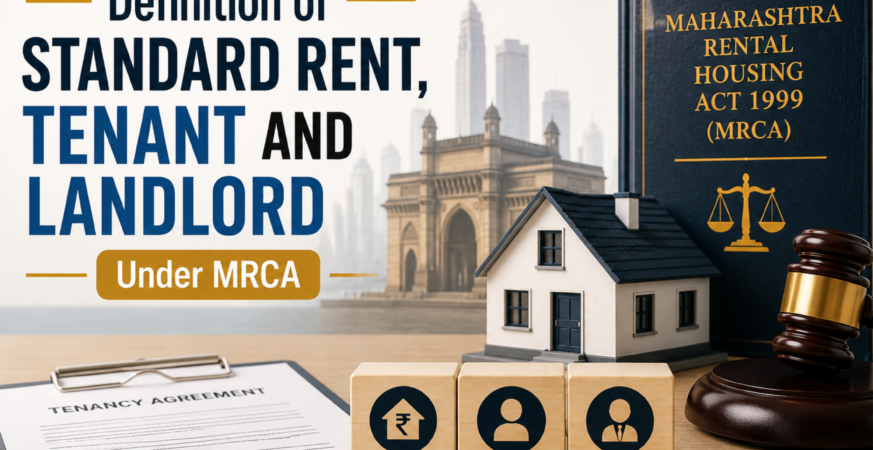
Definition of Standard rent, Tenant And Landlord Under MRCA 1999

Due to industrialization, a huge number of people migrated from rural areas to urban areas, thereby raising the demand for tenanted premises. This sudden shift in demand for tenanted premises gave rise to unfair practices like excess rent, unlawful eviction, etc. In order to address all these problems and ensure uniform application of law throughout the state, the Maharashtra Rent Control Act was introduced as a welfare legislation. To ensure consistency in legislation and correct interpretation, the act provides some important definitions, such as standard rent, tenant, and landlord. Important Provisions Definitions Under MRCA Being enacted as a welfare legislation, MRCA ensures consistent and uniform application of the law through its definitions. Various Definitions under the MRCA form a foundation of the act. They are one of the most important parts of the act. The definitions under MRCA are of wider scope. These definitions are inclusive and avoid escaping due to mechanical interpretation. The scope of the definitions has been kept wider purposefully to provide greater coverage. Section 7 of the act defines all the necessary terms important for the uniform application with their wide scope. S.7(3) Landlord “Landlord” means any person who is, for the time being, receiving, or entitled to receive rent in respect of any premises, whether on his own account or on account of or on behalf of any other person. This definition is of wide scope and inclusive. To be a landlord, receiving rent is more important than having the ownership title. It is not necessary to have legal title over the premises or ownership rights to be a landlord under this act. In simple language, the person who receives the rent or who is entitled to receive the rent is the landlord. A landlord can be the owner of premises or anyone legally entitled to receive the rent on behalf of the owner. The landlord can be: S.7(14) Standard Rent In simple language, legally recoverable rent from the tenant is standard rent. Standard rent is a standardized amount set as rent. This concept was introduced to protect tenants from excess rent. A landlord cannot charge rent that is higher than the standard rent.This amount may be fixed by: Standard rent consists of basic rent payable by the tenant. However, in certain situations, the landlord can also ask for a permitted increase, which is 5% of the standard rent. Permitted increases could be charged due to a hike in municipal taxes, increased facilitiesHence,Total Rent Payable = Standard Rent + Permitted Increase S.7(15) Tenant Tenant is the person liable to pay standard rent to the landlord. Tenant is also defined as a person on whose account rent is payable. “tenant” means any person by whom or on whose account rent is payable for any premises, and includes any person who is Conclusion These definitions are of core importance in connection with the interpretation of the act. A wider scope of these definitions ensures greater coverage and prevents individuals from letting off their liability due to a mechanical interpretation of the definition.

Can a Landlord Enter Home Without Permission?
Local Laws

Can a Landlord Enter Home Without Permission? Know Tenant Privacy Rights

One of the most common question which ask by renters is that, can my landlord enter home without permission whenever they want? The short answer is no — in most places, landlords are legally required to provide advance notice before entering a tenant’s home, except in genuine emergencies.Understanding these protections can help you enforce your right to quiet enjoyment of yourrental property. What the Law Says About Landlord Entry In the United States, most states require landlords to give between 24 to 48 hours of writtennotice before entering a rental property. The reason for entry must typically be reasonable —such as making repairs, inspections, or showing the unit to prospective tenants. Enteringwithout proper notice, except in emergencies like a burst pipe or fire, can be a violation of yourrights and may even constitute harassment. In India, The Model Tenancy Act 2021 outlines similar protections, requiring landlords to provideprior notice before accessing a rented premises. What Counts as an Emergency? True emergencies that allow landlords to enter without notice typically include situations such asa gas leak, flooding, fire, or an urgent structural safety issue. Routine repairs or propertyinspections do not qualify as emergencies. What Can You Do If Your Landlord Violates This? If your landlord enter home without permission or without any proper notice, you have several options. In extreme cases, repeated unauthorized entry could support a harassment claim. Protecting Yourself Going Forward When signing a new lease, look for clauses that define entry notice requirements. If the leasesays nothing, local law controls. You can also negotiate to add a specific notice requirement intoyour lease agreement. Final Thoughts Your home is your private space, even if you are renting it. Knowing that according to tenant privacy rights your landlord cannot simply walk in unannounced gives you both legal protection and peace of mind. If you believe your rights have been violated, speaking with a tenant rights attorney or local legal aid service is a great first step.

Real Estate Regulatory Authority Act
Civil Law

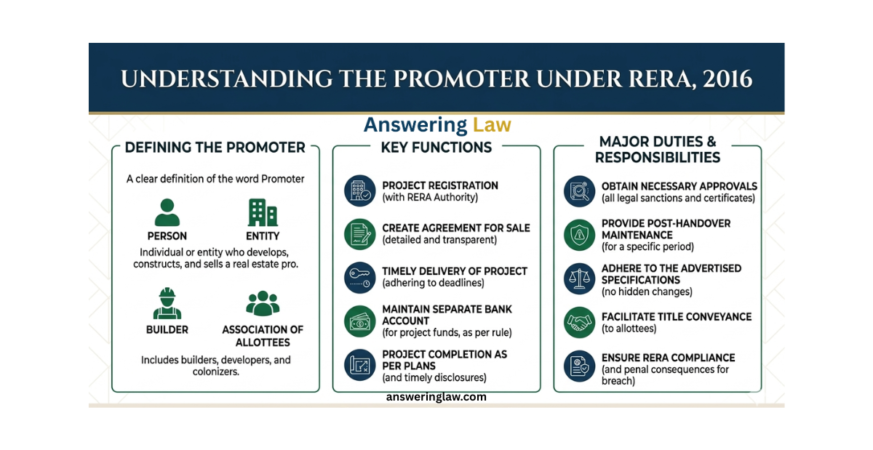
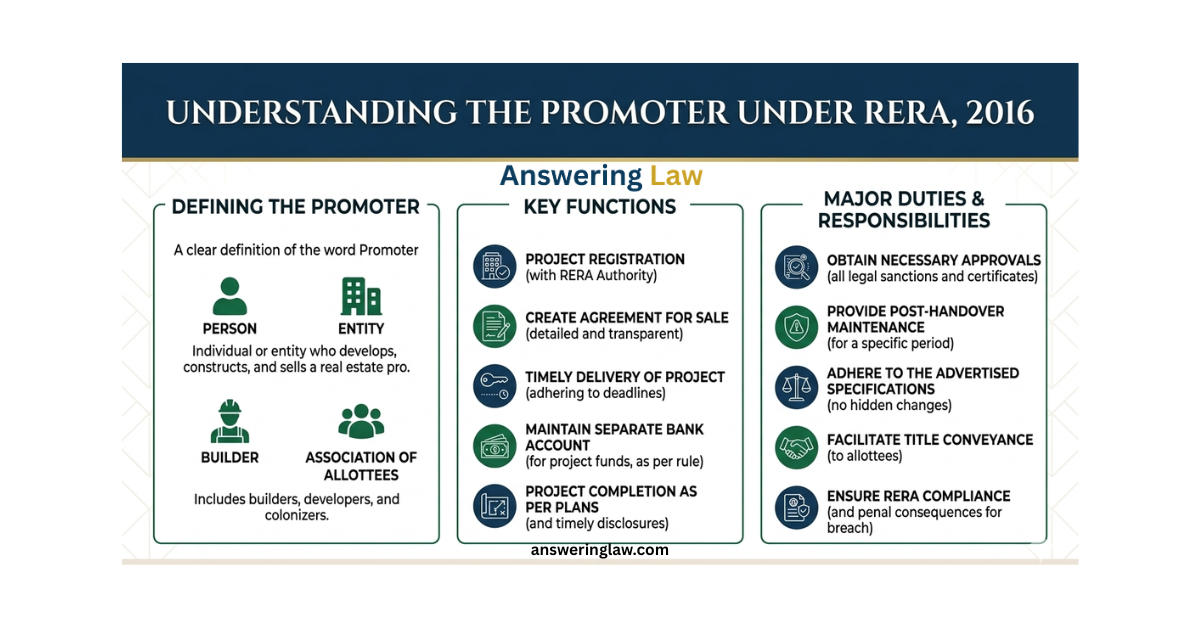
Define Promoter under the Real Estate Regulatory Authority Act,2016, and state his functions and duties.

Functions and Duties of a Promoter Under RERA Introduction : Real Estate Regulatory Authority Act The Real Estate (Regulation and Development) Act, 2016 governs major issues related to the real estate sector in India, such as delays in possession, lack of transparency, hidden charges, and unfair trade practices. The Act aims to regulate the real estate sector and protect the interests of homebuyers. Apart from regulating projects and real estate agents, the Act also lays down detailed provisions regarding the functions, duties, and liabilities of promoters. In this article, we will understand who a promoter is and discuss the important functions and duties of a promoter under RERA. Who is a Promoter? Before understanding the functions and duties of a promoter, it is important to understand the meaning of the term “promoter.” The definition of promoter is provided under Section 2(zk) of the RERA Act. According to the Act, a promoter is any person or entity that develops or constructs a real estate project for the purpose of sale. The definition of promoter under RERA is very broad and includes: Thus, even if a person is not directly constructing the project, but markets or sells it as a developer, such person may still be treated as a promoter under the Act. Functions and Duties of a Promoter (Sections 11–18) A promoter performs several important functions and duties under RERA. Sections 11 to 18 of the Act deal with these obligations to ensure transparency, accountability, and protection of allottees. The major functions and duties of a promoter are discussed below. 1. Creation and Maintenance of Project Web Page One of the primary duties of a promoter is to create and maintain a webpage for the project on the RERA website. This responsibility includes: The promoter must provide accurate and updated information so that potential buyers can make informed decisions. 2. Disclosure in Advertisements and Prospectus Under RERA, promoters are required to disclose all important project-related information in advertisements and prospectuses. The promoter must clearly mention: This provision helps buyers verify project authenticity and obtain complete information before investing. 3. Information at the Booking and Allotment Stage At the booking stage, the promoter is required to provide all essential information related to the project. Such information includes: A promoter cannot invite buyers or sell units without disclosing the required information. Failure to comply with these requirements may attract penalties under the Act. 4. General Responsibilities of the Promoter Apart from specific duties, promoters are also required to fulfill several general responsibilities under RERA. These include: These responsibilities ensure fairness and accountability in the real estate sector. 5. Certificates and Maintenance of Records The promoter is responsible for obtaining and providing all necessary certificates and documents to the allottees. These may include: The promoter must also maintain all required records and documents related to the project. 6. Formation of Association of Allottees It is the duty of the promoter to facilitate the formation of an association, society, or cooperative society of allottees. The promoter is expected to take necessary steps to ensure that the association of allottees is properly formed for future management and maintenance of the project. 7. Conveyance and Payment of Outgoings The promoter is required to execute proper conveyance deeds and maintain all related records and documents. Additionally, the promoter must: This protects the interests of the allottees and ensures legal clarity regarding ownership. Liability of Promoter for Non-Compliance Failure to perform the functions and duties prescribed under RERA may make the promoter liable for penalties, compensation, or even imprisonment in certain cases. The Act imposes strict obligations on promoters to ensure: Conclusion The functions and duties of a promoter under RERA play a significant role in ensuring fairness and transparency in the real estate sector. Sections 11 to 18 of the Act clearly define the responsibilities of promoters and hold them accountable for any default or non-compliance. These provisions help protect the interests of allottees and promote trust and confidence in the real estate market.

Registration Of Real Estate Project Under RERA
Civil Law

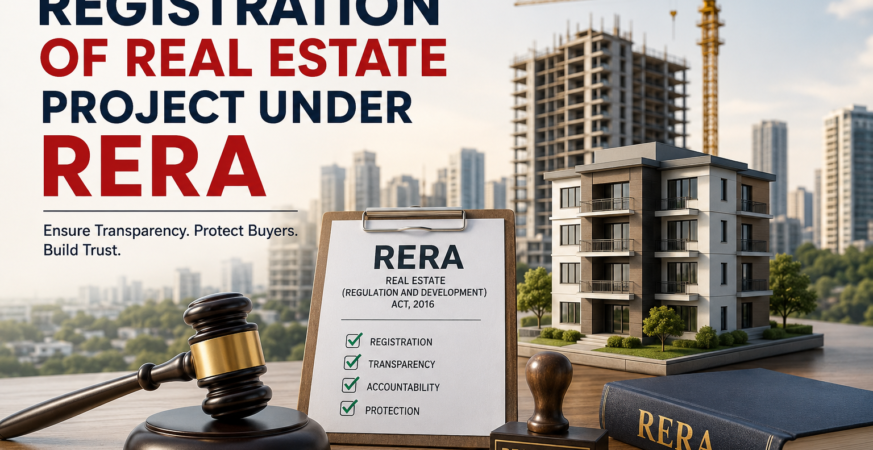
Registration Of Real Estate Project Under RERA

The Real Estate (Regulation and Development) Act, 2016 was introduced to bring fairness and transparency to India’s real estate sector. Before the enactment of RERA, the sector faced several issues such as delays in possession, unauthorized construction, lack of accountability, and fraud against homebuyers. To address these concerns and establish an effective regulatory framework, RERA was enacted. One of the most important aspects of the Act is the mandatory registration of real estate projects, which ensures transparency and protects the interests of allottees and homebuyers. Lets see Registration Of Real Estate Project Under RERA Important Provisions Related to Registration Of Real Estate Project Under RERA Section 3 – Prior Registration of Real Estate Projects Section 3 prohibits promoters from advertising, marketing, booking, selling, or offering to sell any real estate project without first registering the project with the Real Estate Regulatory Authority. This provision ensures that no project is sold before obtaining legal registration from the competent authority. It aims to prevent unlawful practices in the real estate sector and safeguard the rights and interests of homebuyers. Exceptions to Registration – Section 3(2) Registration under RERA is not required in the following cases: Registration of Projects Developed in Phases Each phase of a real estate project is treated as a separate project under RERA. Therefore, every phase requires separate registration. Registration of Ongoing Projects Any project that received a commencement certificate before the enforcement of RERA but did not receive a completion certificate before the commencement of the Act must obtain registration under RERA. However, projects that already received completion certificates before the Act came into force are exempt from registration. Section 4 – Application for Registration of Real Estate Projects Every promoter is required to submit an application for registration in the prescribed form, manner, and within the prescribed time, along with the required fee. Steps in Registration of a Real Estate Project Step 1: Application to the Competent Authority The promoter submits the application along with all required documents and declarations. Step 2: Scrutiny and Verification The Authority verifies the application, supporting documents, approvals, and compliance requirements. Step 3: Grant or Rejection of Registration After verification, the Authority may either approve or reject the registration application. Essential Documents Required for Registration The following documents are generally required: Important Declarations Required During Registration The promoter must submit a declaration supported by an affidavit stating that: Section 5 – Grant of Registration Upon receiving the application, the Authority must, within 30 days: Grant of Registration If the Authority is satisfied with the application, it grants registration and provides: Rejection of Application The Authority may reject the application if it does not comply with the Act, rules, or regulations. However, the applicant must be given an opportunity to be heard before rejection. Deemed Registration If the Authority neither grants nor rejects the application within the prescribed period, the project is considered deemed registered. The Authority must then provide registration details within seven days. Section 6 – Extension of Registration The registration granted under Section 5 may be extended upon an application by the promoter due to: However, the extension cannot exceed one year. Section 7 – Revocation of Registration The Authority may revoke registration: Grounds for Revocation Effects of Revocation Section 8 – Obligation of Authority After Revocation or Lapse After revocation or lapse of registration, the Authority may consult the appropriate government and ensure completion of the remaining development work through: The association of allottees is given the first right of refusal for completing the project. Section 59 – Punishment for Non-Registration Registration under RERA is mandatory. Failure to register a project under Section 3 may attract: For continued non-compliance, the promoter may face: Section 60 – Penalty for Contravention of Section 4 If a promoter provides false information or violates Section 4, a penalty up to 5% of the project cost may be imposed. Important Case Law Neelkamal Realtors Suburban Pvt. Ltd. v. Union of India The Bombay High Court upheld the constitutional validity of RERA and clarified that the Act applies to ongoing projects that had not received completion certificates before the commencement of the Act. Conclusion Registration of real estate projects under RERA is essential for ensuring accountability, transparency, and consumer protection in the real estate sector. Sections 3 to 8 lay down the complete framework for registration, extension, revocation, and obligations of authorities, while Sections 59 and 60 ensure effective enforcement through penalties and punishments. Together, these provisions form the foundation of a transparent and regulated real estate system in India.

Company Refuses to Refund
Civil Law

What to Do If a Company Refuses to Refund You: Your Legal Rights Explained 2026

Have you ever bought a product, found it defective, and then been told by the company that refunds are not possible? You are not alone. Thousands of consumers face this situation every year, and many do not know they have strong legal rights to fight back. Now we are see what If a Company Refuses to Refund You: Your Legal Rights Explained Understanding your consumer rights is the first step to getting your money back. Your Basic Legal Rights as a Consumer In most countries, consumer protection laws require businesses to provide a remedy — which could be a repair, replacement, or refund — when a product is faulty or not as described. In the United States, the Federal Trade Commission (FTC) and individual state consumer protection laws offer strong protections. In India, the Consumer Protection Act 2019 gives buyers powerful tools to seek redress. If a product does not match its description, is defective, or fails to perform as advertised, you are generally entitled to a refund or replacement regardless of what the company’s internal return policy says. Step-by-Step: What You Should Do If a Company Refuses to Refund You Step 1 — Contact the seller in writing: Always put your complaint in writing. An email creates a paper trail. State the problem clearly, include your order details, and request a specific remedy such as a full refund. Step 2 — Know the company’s return policy: Some sellers have a stated window for returns (for example, 30 days). However, if a product is defective, legal protections often override these internal policies. Step 3 — File a complaint with a consumer protection agency: In the US, you can file a complaint with the FTC or your state attorney general. In India, complaints can be filed on the National Consumer Helpline or through consumer courts. Step 4 — Dispute the charge with your bank or credit card company: If you paid by card, you can raise a chargeback request for goods not received or significantly not as described. Step 5 — Consider small claims court: For amounts that do not justify hiring a lawyer, small claims court is a fast and affordable option. You do not need an attorney, and many courts allow online filings. How to Strengthen Your Case Keep all receipts, emails, photos of the product, and records of any communication. The more documentation you have, the stronger your position will be in any dispute or legal proceeding. Final Thoughts Companies rely on consumers not knowing their rights. Armed with the right information, you can assert your legal protections confidently. If a company still refuses after you have followed these steps, consulting a consumer rights attorney — many offer free initial consultations — could be your best next move. Can a Landlord Enter Your Home Without Permission? Know Your Tenant Rights

About Us

Lorem ipsum dol consectetur adipiscing neque any adipiscing the ni consectetur the a any adipiscing.

Email Us: answeringlaw1@gmail.com

Answeringlaw  @2024. All Rights Reserved.