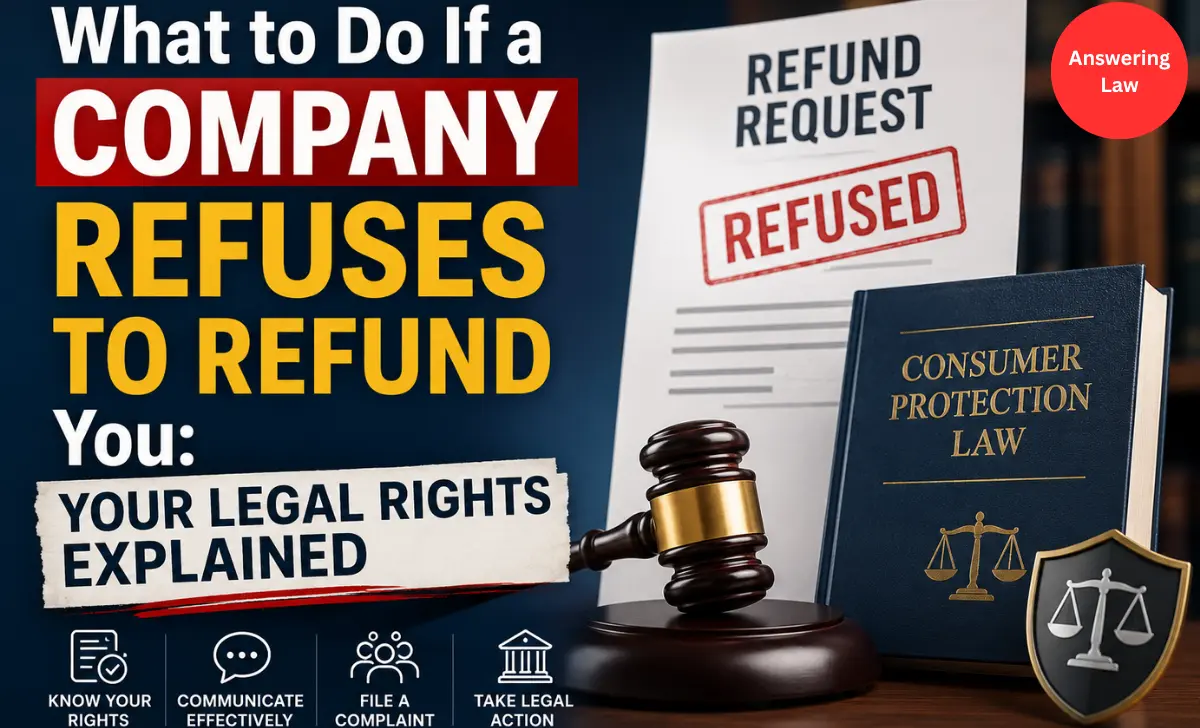


Have you ever bought a product, found it defective, and then been told by the company that refunds are not possible? You are not alone. Thousands of consumers face this situation every year, and many do not know they have strong legal rights to fight back. Now we are see what If a Company Refuses to Refund You: Your Legal Rights Explained
Understanding your consumer rights is the first step to getting your money back.
Your Basic Legal Rights as a Consumer
In most countries, consumer protection laws require businesses to provide a remedy — which could be a repair, replacement, or refund — when a product is faulty or not as described. In the United States, the Federal Trade Commission (FTC) and individual state consumer protection laws offer strong protections. In India, the Consumer Protection Act 2019 gives buyers powerful tools to seek redress.
If a product does not match its description, is defective, or fails to perform as advertised, you are generally entitled to a refund or replacement regardless of what the company’s internal return policy says.
Step-by-Step: What You Should Do If a Company Refuses to Refund You
Step 1 — Contact the seller in writing: Always put your complaint in writing. An email creates a paper trail. State the problem clearly, include your order details, and request a specific remedy such as a full refund.
Step 2 — Know the company’s return policy: Some sellers have a stated window for returns (for example, 30 days). However, if a product is defective, legal protections often override these internal policies.
Step 3 — File a complaint with a consumer protection agency: In the US, you can file a complaint with the FTC or your state attorney general. In India, complaints can be filed on the National Consumer Helpline or through consumer courts.
Step 4 — Dispute the charge with your bank or credit card company: If you paid by card, you can raise a chargeback request for goods not received or significantly not as described.
Step 5 — Consider small claims court: For amounts that do not justify hiring a lawyer, small claims court is a fast and affordable option. You do not need an attorney, and many courts allow online filings.
How to Strengthen Your Case
Keep all receipts, emails, photos of the product, and records of any communication. The more documentation you have, the stronger your position will be in any dispute or legal proceeding.
Final Thoughts
Companies rely on consumers not knowing their rights. Armed with the right information, you can assert your legal protections confidently. If a company still refuses after you have followed these steps, consulting a consumer rights attorney — many offer free initial consultations — could be your best next move.